
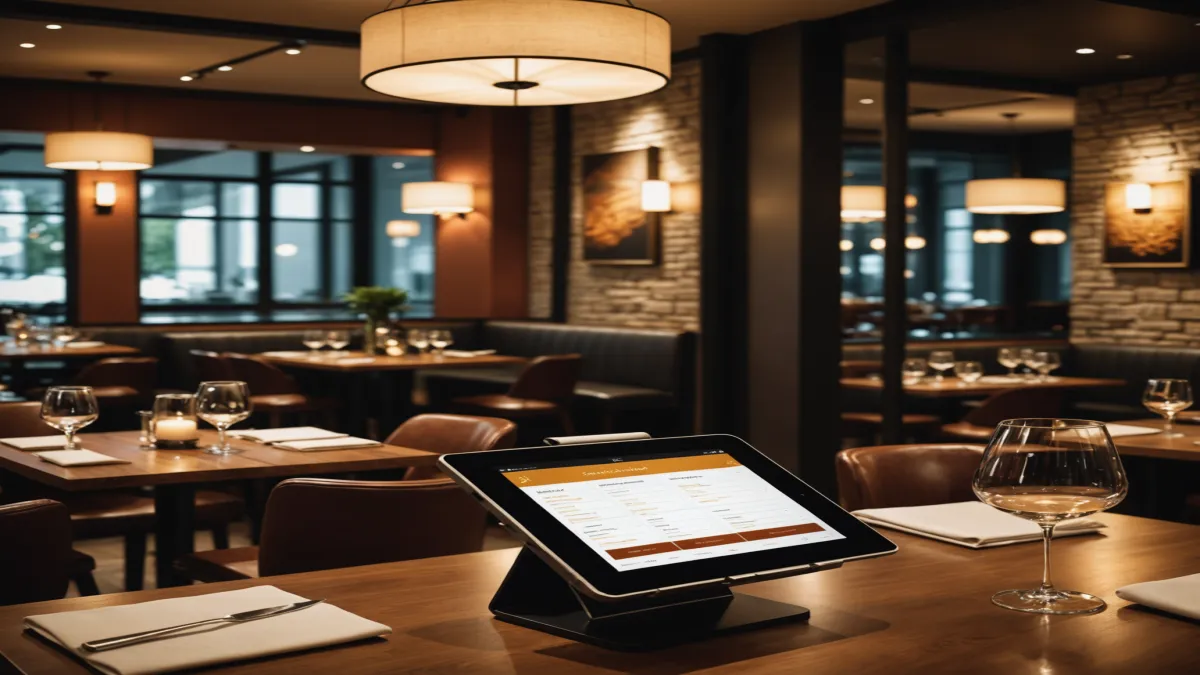
Running one restaurant is hard enough. Running three means every inefficiency multiplies. For one restaurant group we worked with, the management team was spending a huge chunk of their week on tasks that felt important but were entirely repetitive—the kind of work that keeps the lights on but doesn’t grow the business.
Here’s what happened when they decided to automate the most painful parts.
Note: Details have been modified for confidentiality. This represents a typical engagement.
The Problem
Across three locations, the same problems kept eating up time:
Reservation and booking questions. Staff at every location answered the same questions dozens of times a day. “Do you take reservations?” “What time do you close on Sundays?” “Can you accommodate a party of 20?” Each call took 2-3 minutes, and during peak hours, it meant the front desk was tied up with phone calls instead of greeting guests.
Manual reservation management. Reservations came in through phone calls, the website, email, and third-party apps. Keeping them synced across systems was a daily headache. Double bookings happened more often than anyone wanted to admit.
Review responses. With three locations on Google, Yelp, and a couple of other platforms, new reviews came in almost daily. The operations manager tried to respond to all of them personally, but it was taking 4-5 hours a week and the responses were getting slower and shorter as fatigue set in.
Schedule coordination. Staff scheduling across three locations—with shared employees who worked at more than one site—was being managed in spreadsheets. Conflicts, missed shifts, and last-minute scrambles were a weekly occurrence.
The Solution
We didn’t rip and replace their systems. We added automation on top of what they were already using, focusing on the three biggest time sinks.
AI-powered reservation confirmations. We set up an automated system that handles incoming booking requests, confirms reservations via text and email, sends reminders 24 hours before, and answers common questions (hours, location, parking, dietary accommodations) without human involvement. When a question falls outside what the system can handle, it routes to a staff member with the context already attached.
Automated review responses. We built a system that monitors new reviews across all platforms and all three locations. For positive reviews, it drafts a personalized thank-you response using details from the review itself—mentioning the specific dish or experience the reviewer highlighted. For negative reviews, it flags them for the operations manager with a suggested response draft, so she can review and edit rather than write from scratch. Nothing goes out without human approval on negative reviews.
Connected scheduling. We integrated their scheduling with a system that accounts for multi-location availability, automatically flags conflicts, and lets staff pick up or swap shifts through a simple interface. Managers approve changes rather than building schedules from scratch.
The Results
After four weeks of the new systems being live:
12 hours per week saved for the management team. That’s time the operations manager and location managers got back—half a day every week that used to go to phone calls, review writing, and scheduling conflicts.
70% fewer front-desk phone calls about basic questions. The AI handles the routine inquiries, and the staff that used to be tethered to the phone can focus on the guests who are actually in the restaurant.
Faster review response time. Average response time went from 3-4 days to under 24 hours. The operations manager now spends about 45 minutes a week on reviews instead of 4-5 hours, and every review gets a thoughtful response.
Fewer scheduling conflicts. Double bookings for staff dropped to near zero. Shift swap requests that used to generate a chain of texts and calls now get handled in the app.
What It Cost and How Long It Took
The total investment was a few thousand dollars for the initial setup, with modest monthly costs for the AI tools and integrations. The whole project—from first conversation to all systems running—took under three weeks. The reservation and review systems were live within the first week; scheduling took a bit longer because it required migrating historical data and training the team.
The time savings alone covered the monthly costs several times over. When you calculate what a manager’s time is worth and multiply by 12 hours a week, the math is straightforward.
Lessons Learned
A few things we took away from this project that apply to almost any business thinking about AI automation:
Start with the most repetitive task. Don’t try to automate everything at once. Find the one thing that eats the most time, automate that, prove it works, then expand. For this client, that was reservation questions. Once the team saw how well it worked, they were eager to tackle reviews and scheduling.
Keep humans in the loop for sensitive stuff. Automated responses to positive reviews? Fine. Automated responses to a customer complaint? That needs a human eye. Know where the line is for your business and build accordingly.
The hardest part isn’t the technology. It’s getting the team comfortable with the change. The front-desk staff were initially skeptical that an AI could handle booking questions well enough. After a week of seeing it work—and not having to answer the same questions all day—they became its biggest advocates.
Measure before and after. We tracked time spent on each task for two weeks before the project started. Without that baseline, “it feels faster” is the best you can say. With numbers, you can say “we saved 12 hours a week” and mean it.
Is This Right for Your Business?
You don’t have to be a restaurant group to benefit from this kind of automation. The pattern is the same across industries: identify the repetitive work that keeps your team busy but doesn’t require their expertise, and automate it so they can focus on the work that does.
If your team is spending hours on tasks that follow the same pattern every time, there’s probably an automation that can help. Get in touch and we’ll take a look at what makes sense for your situation.